
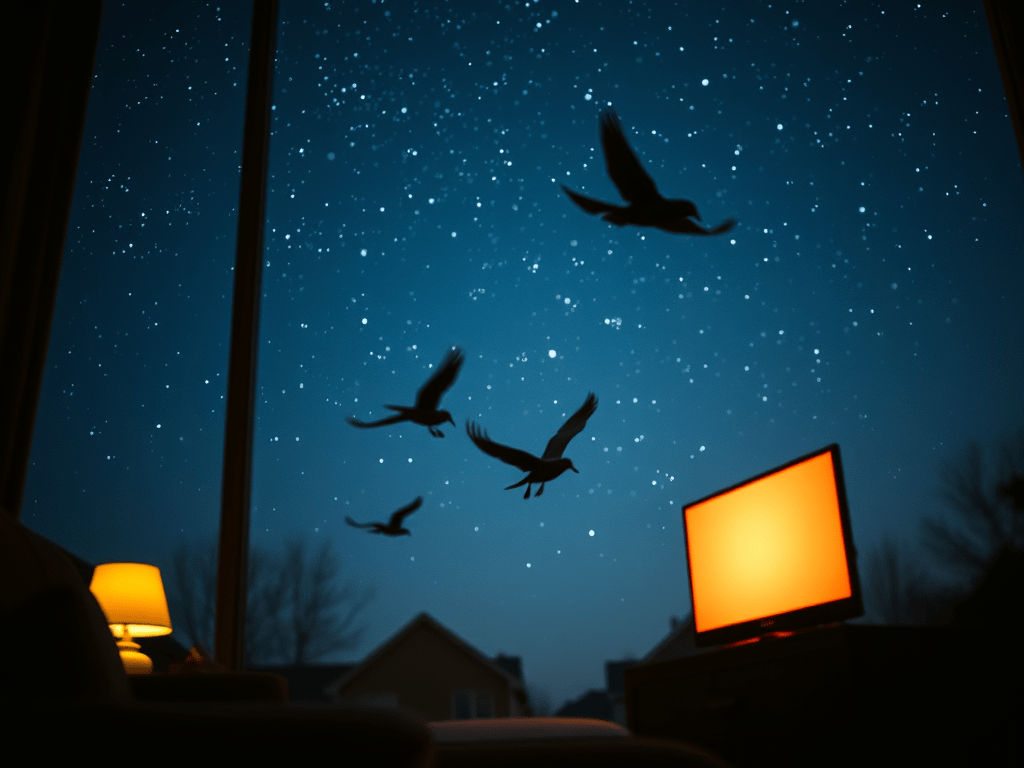
Every year, millions of birds embark on incredible migrations, relying on natural light cues—the moon and stars—to navigate their journeys across continents. However, during their nocturnal flights, these delicate creatures can become disoriented by the artificial light from our homes and buildings. When we “Chilling with Netflix,” we might inadvertently send these birds on an unexpected detour. As television screens grow larger and Netflix creates more addictive offerings, our cozy movie nights have turned into dangerous escapades for flocks flying by. The brightly lit screens in our living rooms have unintentionally become beacons that lure migrating birds off course, disrupting their navigation systems as if a GPS had gone haywire. As we enjoy our binge-watching sessions under this inviting glow, we should consider how this habit impacts wildlife beyond our immediate surroundings. So next time you settle in for another episode or movie marathon, remember: those feathered wanderers could be crashing through your living room window!
What can you do to help?
A little awareness today could protect these vulnerable species tomorrow; after all, they deserve to enjoy their journeys without having to dodge glass walls like an avian obstacle course. Migrating birds instinctively navigate by natural light from celestial bodies at night, relying on this guidance as faithfully as some people rely on coffee every morning (and you know how serious that is). However, when faced with brightly lit buildings disrupting this navigation system—imagine trying to read road signs during a midnight rave—they may become disoriented and exhausted before you can say “tweet tweet!” This disorientation increases the likelihood of colliding with windows or walls as they attempt to escape what seems like an alternative path illuminated by artificial lights. We can all help by minimizing light pollution, such as using blackout curtains or turning off unnecessary lights during migration seasons.
Essentially, as we enjoy evenings filled with visual storytelling through screens—the kind where you wonder if anyone has actually finished watching all episodes—we must remain conscious stewards of nature. By taking small steps to reduce light pollution during migration seasons—especially in urban areas where city life shines brighter than Rudolph’s nose—we can help safeguard these magnificent avian travelers as they journey across challenging skies. So next time you settle in for another episode or movie night, remember: those little birdies are counting on us!
Electrocution displaced from number one and must be content at number two.
Once upon a time, our feathered friends faced an unfortunate fate due to the shocking perils of electrocution from power lines. Unsuspecting birds often received a shock by inadvertently contacting two energized parts of a power line. This feather-frying situation occurred when they took off or landed on a power pole. The risk of turning into “Sparrow McNuggets” prompted energy companies to invest in making power lines safer for our avian buddies. They’ve been installing safe perches—think luxurious bird lounges high above—and insulating components to keep those feathery folks out of harm’s way. However, reducing electrocution, now second on the priority list, deserves more attention than just being an afterthought. Here’s hoping for safer skies where our charming friends can flap freely without fear of becoming crispy critters!
 Robert C. McOuat
Leave a comment