
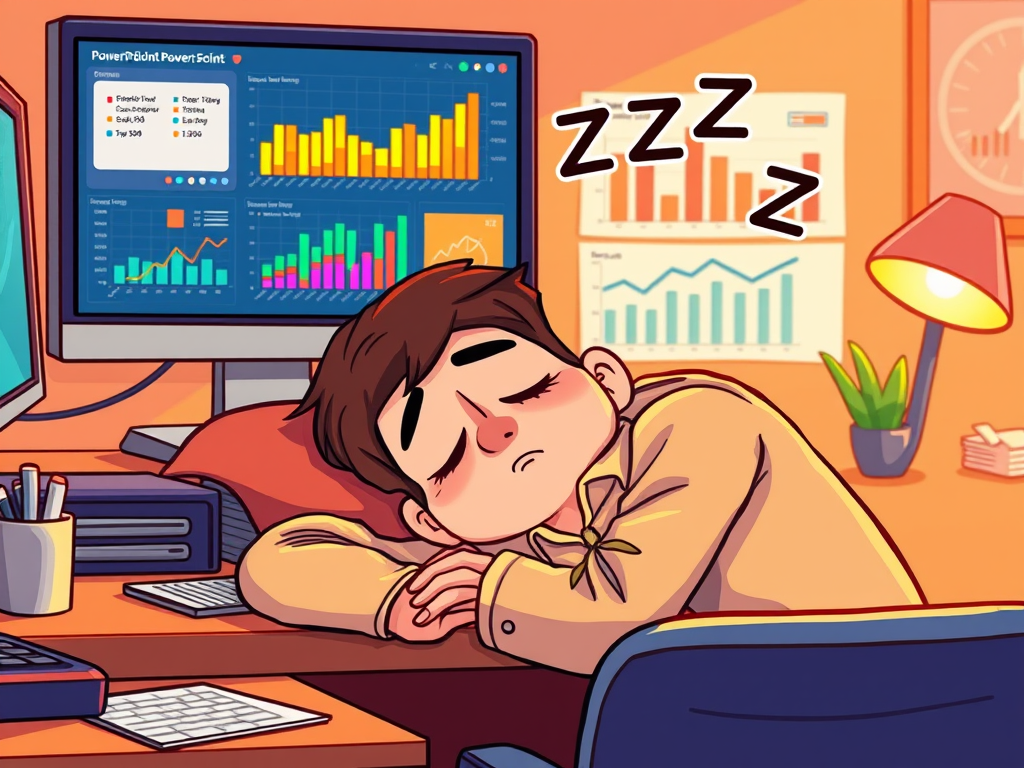
Let’s be real: data-driven initiatives often resemble a numbers buffet that induces yawns faster than you can say “spreadsheet”! Sure, they might be fantastic for generating those crucial reports, but when it comes to evoking genuine human emotions? Well, they miss the mark by a mile. While some folks may proudly claim they’re 100% data-driven decision-makers—like wearing a badge of honor—let’s not kid ourselves.
Since Corporate America is data-driven, don’t we all have to be data-driven?
More often than not, corporate leaders take a scenic detour through Intuition Town, with an obligatory pit stop at Old Faithful Feelings. In the boardroom, where statistics reign supreme and are held in high esteem like trophies on a shelf, leaders might stack their data decks to support whatever viewpoint they already hold—because who wouldn’t want to feel validated? But let’s agree: that approach isn’t more reliable than rolling dice and hoping for good luck with opinions! When leaders are crunched for time—and believe me, 57% of executives reported feeling like they’re racing against clocks—they often push data aside and let intuition wheeze ahead like an old car struggling up a hill. Forget about thoroughly reviewing information; three out of five business leaders frequently make snap decisions without even glancing at that delightful pile of insights sitting right there!
Seems like the politician and board chairman with the best story wins. Despite the abundance of numbers, leaders return to our roots and embrace storytelling instead. Scattered across all those default digits are relatable anecdotes and rich narratives just waiting to explode into life like confetti at a surprise party. Stories evoke emotions and induce deep classical conditioning—the very stuff we respond to even if we don’t recognize it! Remember how little Timmy’s dog saved him from falling into a well? You probably don’t recall any stats or figures about canine heroics; what sticks with you is how it made you feel—a warm fuzzy sensation that has nothing to do with spreadsheets!
Thinking without numbers sounds avant-garde, so it should be resisted?
Numbers, graphs and corny cartoons are the building blocks of all modern PowerPoints. But, before fancy-pants statistical methods emerged onto the scene, humanity thrived for centuries without being shackled by spreadsheets or bogged down by big data analysis. So why not use our brains and our guts. It turns out that blending logic with anecdotal evidence ignites creativity while keeping things lively enough so no one will nod off mid-meeting! Let’s bring our stories back into play—after all, who doesn’t want engaging conversations over piles of PowerPoint slides any day?
Pitfalls of Going Numberless
Just a reminder: most numbers are human inventions. The sky doesn’t have numbers to show temperature, and the ground doesn’t have latitude and longitude markers. Humans assigned these numbers to the earth, atmosphere, and life forms. To make a point, you usually can’t just stick to the numbers; you have to turn them back into an interesting story that someone actually cares about. So, why don’t we skip the numbers? Ah, emotional arguments! They’re like a roller-coaster ride fueled by hot air and a dash of drama. One major pitfall in this whirlwind of feelings is what I call “demagoguery”—a word as ridiculous as some arguments it describes. When emotions take the wheel, we leap to conclusions with all the grace and accuracy of a toddler attempting ballet. Evidence? Who needs it when you can wield a megaphone and shout your way to “truth”?
A second pitfall is partisan politics, a battlefield where Red Sox fans don their jerseys for war against Yankees die-hards armed with nothing but fervor (and maybe a bat or two). Such is politics. Democrats have to hate what Republicans say because a Republican said it, and vice versa. No data-driven argument will dig the voter out of the partisan foxhole. It doesn’t matter how many statistics or historical records exist; both sides are poised to argue until they’re blue (or red) in the face—and it’s all about loyalty first, logic second. In these days of hyper-partisanship, it isn’t just about winning arguments; it’s about winning for your party as if it’s a life-or-death game.
Make the Time to Not Be in Emergency Mode
Maybe it’s not just about numbers versus linguistics. Perhaps it’s actually more about the existential crisis of merely existing in this fast-paced rat race we call work. When it comes to decision-making, we often find ourselves on a chaotic seesaw, teetering precariously between autocratic decisions and distributed methods that leave everyone scratching their heads like confused cats. On one end of this wild ride lies “fire drill central,” where those moments arise when the boss barks out an order to “jump,” and all you can do is muster up your best Olympic-style leap while asking, “How high?” Let’s be real—nobody wants to dive into a lengthy data discussion while the office is metaphorically—or for some overzealous types, literally—going up in flames! In these urgent situations, decisions must be made quickly and decisively; hence, there’s definitely a time and place for those autocratic calls that make you feel like you’re starring in an action movie. Now let’s take a moment to talk about urgency because apparently 57% of executives feel like they’re perpetually racing against the clock as if they’re extras in some twisted version of ‘Fast & Furious.’ Why are we always sprinting around like caffeinated squirrels during nut-collecting season? Can’t we steal just five minutes from that high-speed chase to actually plan an engaging narrative about our company’s future?
Fighting the Urgency Monster
It seems crucial that our culture allows for some downtime where we can hit pause on the urgency monster and think about where we now stand as well as where we’re headed (just like an individual might do during their midlife crisis). We thrive on adrenaline-filled moments when life feels like it’s hanging by a thread, but to truly survive—and maybe even thrive—we need some existential time to ponder what exactly we’re doing all this hustle for. After all, nothing fosters collaboration quite like delicious treats strategically placed within arm’s reach! In summary, balancing these two realms can feel akin to juggling flaming swords while riding a unicycle down a tightrope suspended over shark-infested waters—but fear not; with just a sprinkle of humor mixed with open communication sprinkled liberally throughout our meetings, we may very well stick the landing!
Citations and Further Reading
Bresnick, J. (2024). Leaders trust their data, so why aren’t they using it to make decisions? Digital Health Insights. https://www.dhinsights.org/news/leaders-trust-their-data-so-why-arent-they-using-it-to-make-decisions.
Kamer, G. (2020). Stop Using Data Alone to Make Decisions. Harvard Political Review. https://harvardpolitics.com/stop-using-data-alone-to-make-decisions/
Wheeler, K. (2024). Confluent: Why do CEOs Struggle with Data-Driven Decisions? Technology Magazine. https://technologymagazine.com/articles/confluent-why-do-ceos-struggle-with-data-driven-decisions%5C
 Robert C. McOuat
Leave a comment