
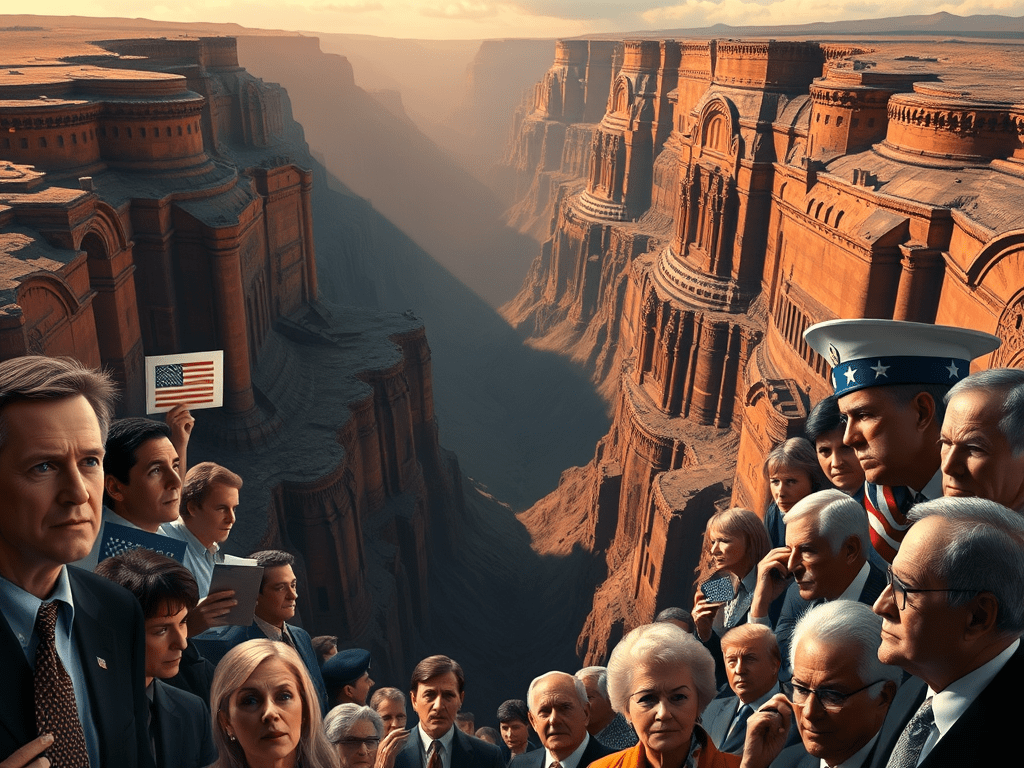
Our national discourse has become so divided that trying to have a rational debate feels like shouting into both ends of a canyon and only hearing echoing sarcasm. Deeply entrenched ideological differences have carved out a canyonwide chasm between the two major political parties; each side clings stubbornly to its beliefs as if letting go would cause their favorite news anchor to shed one perfectly timed, disappointed tear onscreen. This polarization has led not just to impassioned debates but also an ever-widening divide in public opinion and policy positions. But what are we arguing about? What differences are we actually clinging to with such stubborn enthusiasm?
The National Debt
The classic American political spectacle never goes out of style: Tax-and-Spend Democrats clashing with their arch-nemeses, the No-Tax-Really-Little-Government-Give-Me-My-Money-Back Republicans. It’s a showdown as predictable as cable TV reruns. But if you pause the shouting for a moment and casually ask, “Um, so who’s actually tossing us further into that ever-expanding chasm called the national debt?”—the scene looks less like a dramatic ideological battle and more like a group science project where everyone forgot to do the homework, let alone bring the budget spreadsheet.
Our collective credit card is maxed out to cartoonish levels. We’re staring at an eye-popping $38.5 trillion tab. To put that in perspective: if you divided that debt among every American, each person would owe about $114,967—a sum hefty enough to buy a cozy tiny house on wheels, pay off college tuition, and maybe even cover those medical bills insurance always seems to “forget.” Neither party is focused on economic decline; both are focused on re-election. For neither party is economic discipline a reality. Both are more concerned with getting elected than with fiscal responsibility. It turns out both parties love to swipe Uncle Sam’s credit card—it just depends on whether they’re shopping for tanks or school lunches. Recession? Swipe! Big military contract? Swipe! Massive tax cut in hopes economic elves come fix everything overnight? Double swipe! Regardless of the party, they’re all writing checks from the same account.
Bottom line: Whether Democrats or Republicans hold the pen during budget season, political party isn’t always the biggest driver of debt—it might be global recessions or defense booms fueling our epic spending spree. In practice, both sides redistribute money—Democrats favor welfare programs for people in need, while Republicans opt for the military. When it comes to managing the nation’s finances, no party holds the high ground. Nobody’s really on Team Tiny Government anymore. We’re just passing around the same battered old briefcase of debt, held together with political duct tape. Most politicians these days are economic moderates with a touch of whatever keeps them electable.
Elites Get On and Off the Political Carousel
Every time the presidency changes parties, we assume it’s like someone hitting the reset button on Washington’s grand administrative machine. An entire cast of officials loyal to one party is shown the door, while a fresh batch from the other side steps in with polished résumés and even shinier diplomas. But if you look closely at this so-called transformation, you might notice that not much actually changes. The new ruling party doesn’t exactly recruit from middle America; instead, they simply swap in their own team—a parade of Harvard and Yale alums—replacing those Harvard and Yale grads from the previous administration. The faces in high-level government jobs change, but their alma maters (and country club memberships) remain suspiciously consistent.
In reality, it’s an exclusive game of elite musical chairs: your party wins an election, so your well-heeled friends get cushy appointments to federal agencies or plum ambassador posts. When power inevitably shifts back to the other side, these insiders simply glide off to lucrative gigs at investment banks or policy think tanks—essentially taking a sabbatical from governance until their next turn comes up. No hard feelings; no lasting consequences for this privileged crowd. They’re certainly not out there fighting for Joe or Jane Average—they’re mostly orbiting around each other while we regular folks are left munching on rhetorical junk food: fiery speeches and dramatic soundbites carefully crafted to stir us up just enough before election season rolls around again.
So whether you pull the lever for Republicans or Democrats may feel momentous—and don’t get me wrong, civic participation deserves a standing ovation—but beneath those grand red-and-blue banners, it’s often just business as usual behind the scenes. The show goes on for them regardless of who wins; meanwhile, we’re left wondering if anything truly meaningful ever changes beyond which team gets better seats at Washington’s most exclusive dinner parties.
Parties Take Turns Being President
Voters seem to have a built-in political expiration date—after eight years, they’re ready to swap out the old party for something that feels fresh or at least unfamiliar. Incumbent parties often find themselves packing up after two terms, as if there’s a national timer that dings and declares, “Time for new management!” Ever since I can remember, the two mighty political behemoths—let’s call them Red and Blue for the sake of suspense—have treated presidential power like a relay race baton: each one hangs on for eight years (or less if they really mess up), then reluctantly hands it over.
Since Eisenhower’s days in office, back when TVs had rabbit ears and rock and roll was still scandalous, there’s only been one notable exception to this well-choreographed dance: after Reagan wrapped up his tenure with an enthusiastic thumbs-up, Bush managed to snag a third consecutive Republican term. That was the GOP’s only back-to-back presidential victory lap. Of course, Jimmy Carter—the Democrat with the famous grin—only got four years before voters brought in Ronald Reagan, the architect of the modern Republican Party. Otherwise, The parties have been almost comically even-steven. Like kids on a playground taking turns on the swing set, Democrats and Republicans have politely swapped seats behind the Resolute desk with routine regularity. It seems America just likes to keep things balanced—or maybe there’s just not that much difference.
The Core Differences are Illusions
Are these truly significant distinctions, or are we just being treated to yet another installment of the age-old brand wars—Coke versus Pepsi all over again—except now they’re dressed up as epic ideological showdowns for market share. Peel back those glitzy campaign ads and thunderous sound bites and you’ll discover a simple, sobering truth: many of these supposed foes are actually more like long-lost twins who were separated at birth. Forget about hard-hitting economic realities or even those notorious turf battles over who gets dibs on the office with a window view; deep down, once you sweep aside all the star-spangled banners and hypnotic jingles, it becomes clear that political parties are desperately scrambling to invent differences out of thin air—like magicians pulling rabbits from hats—just to hold our ever-wandering attention. “Bipartisanship”? Please! That word has become so taboo. We’re served gladiatorial contests where snark takes center stage and making noise is valued far above making sense. What we really need aren’t false prophets peddling illusions under flickering spotlights—we need real visionaries capable of delivering political substance rather than smoke-and-mirrors entertainment. Because unless someone brings actual ideas to this circus tent, we’re doomed to keep watching reruns of the same old rivalry: different packaging, same empty calories.
 Robert C. McOuat
Leave a comment